


Visit the official Abacus.ai website for platform documentation and enterprise demos.
Introduction to Abacus.ai
Abacus.ai is a modern enterprise AI platform designed to simplify how organizations build, deploy, and manage artificial intelligence systems. As businesses increasingly adopt generative AI, large language models (LLMs), and AI agents, the challenge is no longer innovation but execution at scale.
Abacus.ai addresses this challenge by offering an end-to-end, fully managed AI environment that enables enterprises to integrate AI into real business workflows with speed, control, and reliability.
Unlike fragmented AI tools that require deep data science expertise, Abacus.ai provides a unified AI Super Assistant that combines data integration, model orchestration, workflow automation, and deployment under one platform.
This article provides a technical yet easy-to-understand overview of Abacus.ai, its core architecture, features, use cases, and why it is increasingly adopted by enterprises building production-grade AI systems.
What Is Abacus.ai?
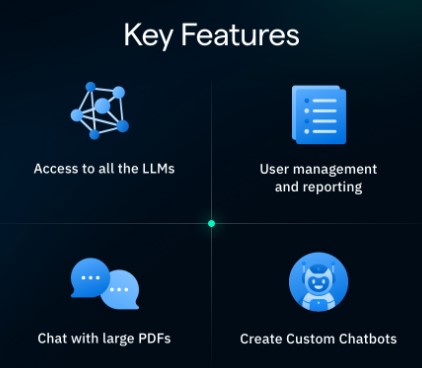
Abacus.ai is an enterprise-grade AI and machine learning platform built to operationalize AI across organizations. It enables teams to create custom AI models, deploy RAG chatbots, orchestrate LLMs, and automate AI workflows without managing complex infrastructure.


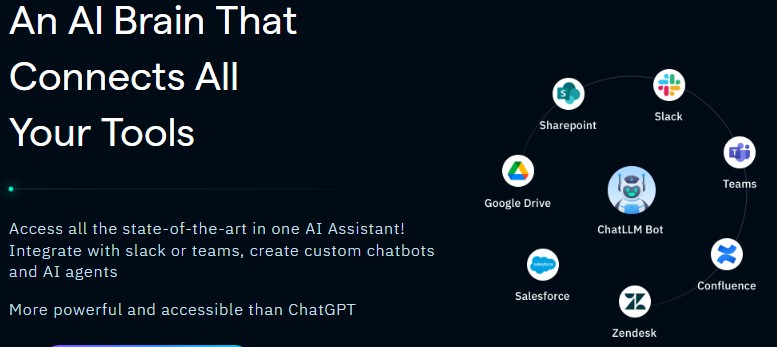
The platform supports both traditional machine learning and modern generative AI, making it suitable for predictive analytics, real-time insights, and conversational AI. Abacus.ai acts as a centralized “AI brain” for organizations, allowing AI systems to securely access enterprise data and generate actionable outputs.
Core Architecture of Abacus.ai
Unified AI Platform Design
Abacus.ai is designed as a single, integrated platform rather than a collection of disconnected tools. Its architecture includes:
- Data ingestion and pipelines
- Feature stores for machine learning
- LLM orchestration and hosting
- AI workflow automation
- Deployment and monitoring
This unified design reduces technical debt and accelerates AI adoption across teams.
Fully Managed Infrastructure
The platform provides fully managed AI infrastructure, removing the need for teams to manage model training environments, scaling, or deployment pipelines. This allows engineers and data teams to focus on logic and outcomes rather than operations.
Key Features of Abacus.ai
AI Super Assistant
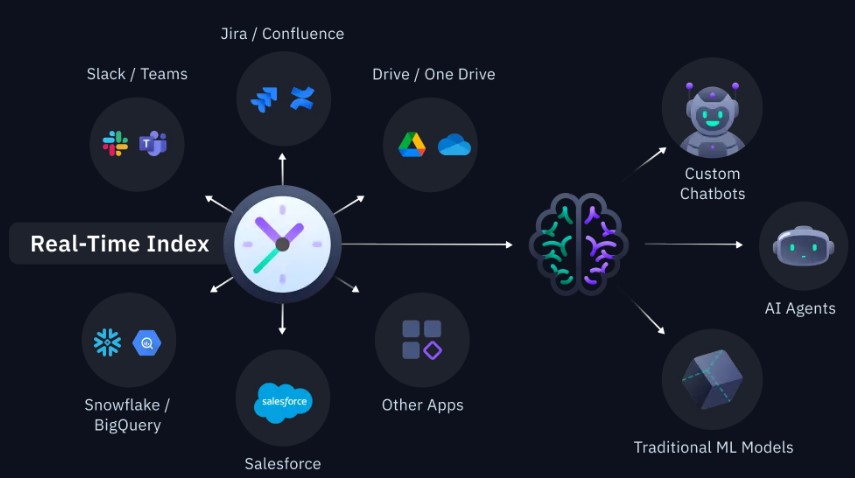
The AI Super Assistant is a central interface that allows users to interact with enterprise data using natural language. It enables decision-makers and technical users to query systems, generate insights, and trigger automated actions using AI.

ChatLLM and Generative AI Capabilities
Abacus.ai offers ChatLLM, a customizable conversational interface powered by leading large language models. Organizations can:
- Connect LLMs to internal data
- Create secure enterprise chatbots
- Deploy role-based AI assistants
This makes generative AI usable beyond experimentation and into production systems.
Deep Agent (General-Purpose AI Agent)
The Deep Agent is a general-purpose AI agent capable of executing multi-step tasks across systems. It can reason over data, call tools, and automate workflows, making it suitable for advanced enterprise automation scenarios.
AI Workflow Automation and Orchestration
Intelligent Workflow Automation
Abacus.ai enables AI workflow automation that integrates with business systems. Workflows can include data extraction, transformation, model inference, and output delivery in real time.
LLM Orchestration
The platform supports LLM orchestration, allowing organizations to route tasks across different models based on cost, performance, or task type. This ensures optimal use of generative AI resources while maintaining control.
Building RAG Chatbots with Abacus.ai
Secure Retrieval-Augmented Generation (RAG)
Abacus.ai supports RAG chatbots, enabling LLMs to retrieve information from enterprise knowledge bases, documents, and databases before generating responses. This approach improves accuracy and reduces hallucinations.
Enterprise Data Integration
RAG implementations can connect to:
- Structured databases
- Unstructured documents
- APIs and data lakes
All data access is controlled using enterprise-grade security and permissions.
Multimodal AI Support
Text, Image, and Code Intelligence
Abacus.ai supports multimodal AI, allowing models to process text, images, and code. This enables use cases such as document understanding, image analysis, and code generation within a single platform.

Scalable Multimodal Pipelines
Multimodal pipelines can be deployed at scale, making the platform suitable for complex enterprise applications that require multiple data types.
Machine Learning and Feature Management
Feature Store and Data Pipelines
Abacus.ai includes a built-in feature store that ensures consistency between training and inference. Data pipelines can be built using SQL and Python, enabling seamless data preparation and transformation.
Real-Time and Batch Processing
The platform supports both real-time inference and batch processing, allowing teams to deploy models that respond instantly or generate scheduled insights.
AI Model Evaluation and Guardrails
Model Monitoring and Evaluation
Abacus.ai provides tools for AI model evaluation, allowing teams to track performance, drift, and output quality over time. This is critical for maintaining reliability in production systems.
Guardrails and Governance
The platform includes AI guardrails that enforce safety, compliance, and consistency. This is especially important for regulated industries where AI outputs must be explainable and controlled.
Enterprise Security and Compliance
Data Privacy and Access Control
Abacus.ai is designed for enterprise environments, offering:
- Role-based access control
- Secure data isolation
- Audit logs
These features ensure sensitive business data remains protected.

Compliance-Ready AI Deployment
The platform supports compliance requirements by providing transparency into data usage, model behavior, and decision logic.
Enterprise Use Cases of Abacus.ai
Business Intelligence and Analytics
Organizations use Abacus.ai to generate AI-driven insights from large datasets, enabling faster and more accurate decision-making.
Customer Support Automation
With custom AI agents and RAG chatbots, companies can automate customer support while maintaining high response accuracy.
Sales and Marketing Optimization
AI assistants can analyze customer data, generate recommendations, and automate outreach workflows.
Operations and Process Automation
The Deep Agent and workflow automation capabilities enable intelligent process automation across operations, finance, and supply chain systems.
Benefits of Using Abacus.ai
- Faster AI deployment
- Reduced operational complexity
- Unified AI and ML platform
- Secure enterprise integration
- Scalable generative AI adoption
These benefits make Abacus.ai suitable for organizations moving from AI experimentation to production.
How Abacus.ai Differs from Traditional AI Platforms
Traditional AI platforms often require multiple tools for data processing, model training, deployment, and monitoring. Abacus.ai consolidates these into a single platform, reducing integration effort and improving operational efficiency.
Its focus on enterprise generative AI, AI agents, and workflow automation sets it apart from legacy machine learning platforms.
Abacus.ai vs Traditional AI Platforms
Abacus.ai vs DataRobot
Platform Focus
- Abacus.ai: Combines predictive ML, generative AI, AI agents, and workflow automation.
- DataRobot: Primarily focused on automated machine learning and predictive analytics.
Generative AI Capabilities
- Abacus.ai: Native support for LLMs, RAG chatbots, and AI assistants.
- DataRobot: Limited generative AI support, mainly add-on based.
Best Fit
- Choose Abacus.ai for enterprise generative AI and automation.
- Choose DataRobot for traditional ML model development and forecasting.
Abacus.ai vs AWS SageMaker
Infrastructure Management
- Abacus.ai: Fully managed platform with minimal infrastructure setup.
- AWS SageMaker: Requires AWS expertise and manual orchestration of services.
Ease of Use
- Abacus.ai: Higher-level abstraction with faster deployment.
- SageMaker: More control, but higher complexity.
Generative AI
- Abacus.ai: Built-in LLM orchestration and AI agents.
- SageMaker: Requires integration with multiple AWS services.
Best Fit
- Choose Abacus.ai for faster time-to-value.
- Choose SageMaker for deep AWS-native customization.
Abacus.ai vs Google Vertex AI
Platform Design
- Abacus.ai: Unified AI super assistant approach.
- Vertex AI: Modular services integrated into Google Cloud.
AI Workflow Automation
- Abacus.ai: Native AI workflow automation.
- Vertex AI: Requires custom pipeline setup.
Enterprise AI Agents
- Abacus.ai: Built-in AI agents and Deep Agent.
- Vertex AI: Limited agent-based automation out of the box.
Best Fit
- Choose Abacus.ai for end-to-end AI automation.
- Choose Vertex AI for Google Cloud–centric environments.
Abacus.ai vs Azure Machine Learning
Integration
- Abacus.ai: Cloud-agnostic, enterprise-focused.
- Azure ML: Strong Microsoft ecosystem integration.
Generative AI Readiness
- Abacus.ai: Designed for production generative AI.
- Azure ML: Requires additional services for LLM orchestration.
Deployment Speed
- Abacus.ai: Faster deployment with less configuration.
- Azure ML: More setup but strong governance tools.
Best Fit
- Choose Abacus.ai for rapid generative AI adoption.
- Choose Azure ML for Microsoft-centric enterprises.
Feature Comparison Table
| Feature | Abacus.ai | DataRobot | SageMaker | Vertex AI | Azure ML |
|---|---|---|---|---|---|
| Generative AI | ✔ Native | Limited | Partial | Partial | Partial |
| AI Agents | ✔ Yes | No | No | Limited | Limited |
| RAG Chatbots | ✔ Built-in | No | Custom | Custom | Custom |
| Workflow Automation | ✔ Native | Limited | Custom | Custom | Custom |
| Fully Managed | ✔ Yes | ✔ Yes | No | Partial | Partial |
| Cloud Agnostic | ✔ Yes | ✔ Yes | No | No | No |
When Abacus.ai Is the Better Choice
Abacus.ai is the better choice when organizations need:
- A single platform for ML and generative AI
- Production-ready AI agents
- Secure RAG chatbots connected to enterprise data
- Minimal infrastructure management
- Faster AI deployment with lower operational overhead
When Alternatives May Be Better
Other platforms may be preferable when:
- Deep cloud-native customization is required
- The organization is locked into a single cloud provider
- The focus is only on traditional machine learning models
- Existing teams already specialize in AWS, GCP, or Azure tooling
Learn more about AI automation in our guide: How to Use AI to Automate Tasks.
Conclusion
Abacus.ai is a powerful enterprise AI platform built to meet the real-world demands of modern organizations. By combining generative AI, LLM orchestration, AI workflow automation, and enterprise-grade security, it enables businesses to deploy AI systems that are scalable, reliable, and easy to manage.
For technical teams seeking a unified solution to build AI agents, deploy RAG chatbots, and operationalize machine learning at scale, Abacus.ai offers a structured and future-ready approach. As AI continues to evolve, platforms like Abacus.ai will play a critical role in turning advanced models into measurable business outcomes.
Frequently Asked Questions (FAQs)
What is Abacus.ai used for?
Abacus.ai is used to build and deploy enterprise AI applications, including generative AI assistants, RAG chatbots, predictive models, and automated AI workflows.
Is Abacus.ai suitable for enterprise use?
Yes, Abacus.ai is built specifically for enterprise environments, offering data security, role-based access control, AI governance, and scalable infrastructure.
Does Abacus.ai support large language models (LLMs)?
Abacus.ai supports LLM orchestration, allowing organizations to deploy, manage, and optimize multiple large language models within a single platform.
What is the Deep Agent in Abacus.ai?
Deep Agent is a general-purpose AI agent in Abacus.ai that can execute multi-step tasks, reason over data, and automate enterprise workflows.
Can Abacus.ai integrate with existing business data?
Yes, Abacus.ai integrates with structured and unstructured enterprise data sources, APIs, and data pipelines using secure access controls.
What industries benefit from Abacus.ai?
Industries such as finance, healthcare, retail, SaaS, telecommunications, and manufacturing benefit from Abacus.ai’s AI automation and analytics capabilities.